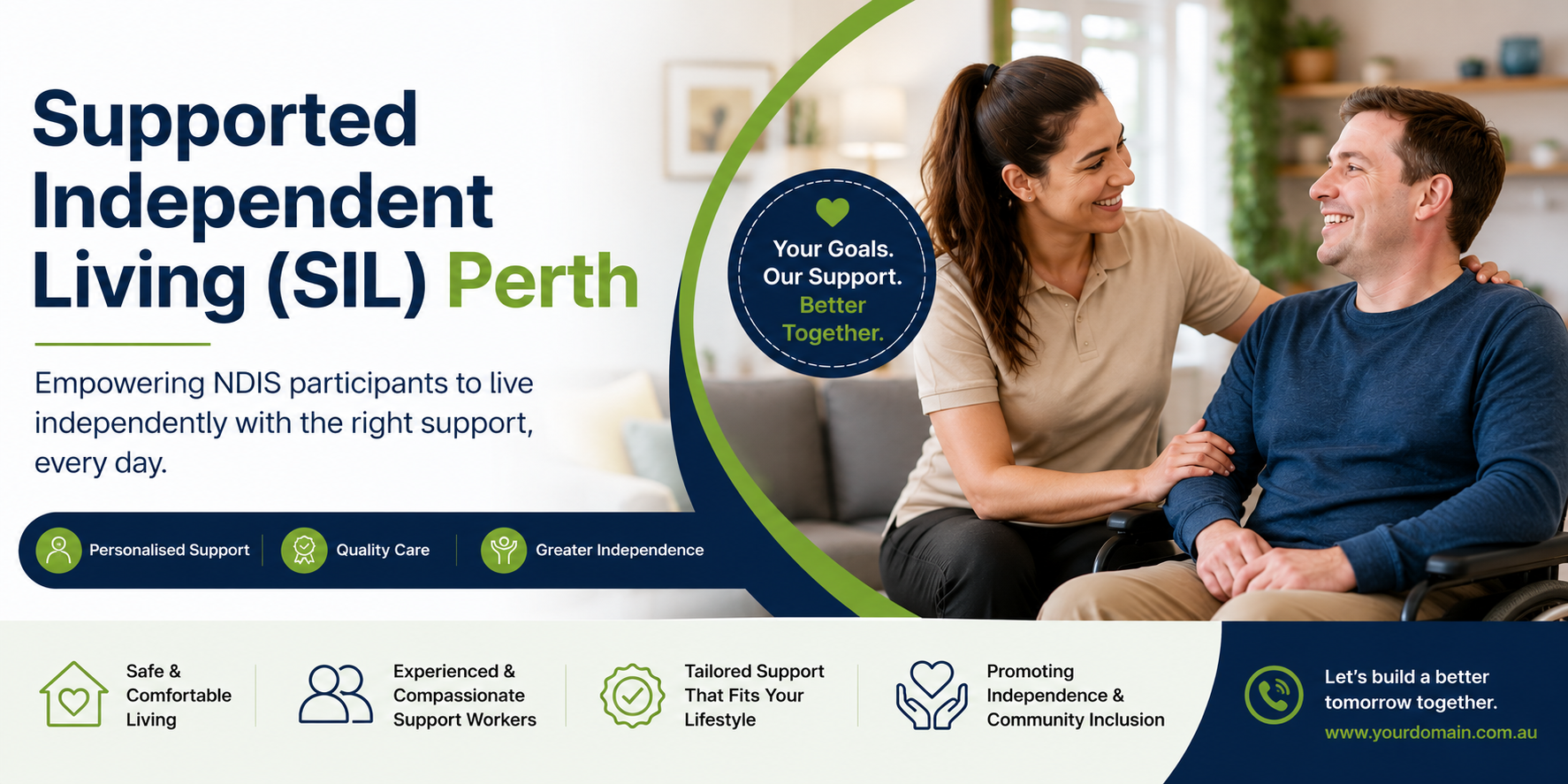
Choosing the right living arrangement is one of the most important decisions for people living with disabilities and their families. The right support environment can improve independence, safety, wellbeing, and quality of life while helping participants achieve their long-term goals.

For many participants, Supported Independent Living (SIL) provides the structured assistance needed to manage daily tasks while encouraging greater independence and community participation.

As one of the most significant Home and Living supports funded through the National Disability Insurance Scheme (NDIS), SIL helps people with higher support needs build essential life skills and live in an environment that matches their individual goals and circumstances.

This guide explains what Supported Independent Living is, who may be eligible, how funding is assessed, what services are included, and important factors to consider when exploring SIL options.

What Is Supported Independent Living (SIL)?

Supported Independent Living (SIL) is an NDIS-funded support designed for participants who require ongoing assistance with everyday activities because of the impact of their disability.

SIL funding covers the support workers and assistance participants receive, not the cost of the accommodation itself.

The primary objective of SIL is to help participants live as independently as possible while receiving the level of support necessary to maintain their health, safety, and wellbeing.

SIL is commonly provided in shared living arrangements where multiple participants live together and receive support. However, depending on individual circumstances and evidence of need, some participants may receive SIL support while living independently.

Common SIL supports may include:

  • Personal care and hygiene assistance
  • Meal planning and preparation
  • Household cleaning and maintenance
  • Medication management support
  • Community participation assistance
  • Shopping and daily errands
  • Skill-building and capacity development
  • Overnight or 24-hour support

Why Supported Independent Living Matters

From an NDIS perspective, SIL is not simply about providing assistance with daily tasks. It is designed to help participants develop skills, increase independence, and improve overall quality of life.

Many participants who access SIL report improvements in:

  • Confidence and self-esteem
  • Daily living skills
  • Social participation
  • Community engagement
  • Personal safety and wellbeing
  • Goal achievement and independence

The level of support provided is tailored to the participant’s individual circumstances, ensuring supports remain person-centred and aligned with their NDIS goals.

How SIL Supports Daily Independence

Developing Everyday Living Skills

One of the key purposes of SIL is helping participants build practical skills needed for daily life.

Support workers may assist participants with:

  • Cooking and meal preparation
  • Budgeting and money management
  • Laundry and household tasks
  • Time management
  • Personal organisation
  • Maintaining daily routines

Over time, participants are encouraged to increase their independence where possible and develop confidence in managing everyday responsibilities.

Promoting Health and Safety

Participants with complex support requirements may need assistance with:

  • Medication management
  • Personal care routines
  • Mobility support
  • Behavioural support strategies
  • Health-related daily activities

A structured support environment helps reduce risks while ensuring participants receive consistent care.

Encouraging Community Participation

A key objective of the NDIS is supporting participants to engage in their communities.

SIL supports may help individuals:

  • Attend appointments
  • Participate in recreational activities
  • Build social connections
  • Access education and employment opportunities
  • Develop community engagement skills

Meaningful participation can contribute significantly to overall wellbeing and independence.

Who Is Eligible for Supported Independent Living Funding?

SIL funding is generally intended for NDIS participants who require substantial and ongoing support with daily living activities.

Eligibility is assessed individually and depends on several factors.

Functional Impact of Disability

The NDIS considers how a participant’s disability affects their ability to complete everyday tasks independently.

Participants must demonstrate that their disability creates significant functional limitations requiring regular support.

Level of Support Required

SIL is typically considered for individuals who need:

  • Frequent daily support
  • Overnight assistance
  • Continuous support throughout the day
  • 24-hour support arrangements

The intensity and frequency of support needs play a major role in funding decisions.

Professional Evidence and Assessments

Strong applications are usually supported by reports from qualified professionals such as:

  • Occupational therapists
  • Support coordinators
  • Allied health professionals
  • Behaviour support practitioners
  • Medical specialists

These reports help demonstrate why SIL is necessary and how it supports participant goals.

Reasonable and Necessary Criteria

The NDIS must determine that SIL represents a reasonable and necessary support under the NDIS Act and is directly related to the participant’s disability-related needs.

Expert Insight: Participants who provide detailed functional capacity assessments and evidence-based recommendations from allied health professionals often have stronger SIL funding applications.

How to Apply for SIL Funding

The SIL application process involves assessment, planning, and evidence gathering.

Step 1: Identify Housing and Support Goals

Discuss your current living situation and future goals with:

  • Support Coordinator
  • Local Area Coordinator (LAC)
  • NDIS Planner
  • Allied Health Professionals

Step 2: Complete Functional Assessments

An Occupational Therapist may assess:

  • Daily living abilities
  • Functional capacity
  • Current support requirements
  • Future independence goals

Step 3: Gather Supporting Documentation

Common supporting evidence includes:

  • Functional Capacity Assessments
  • Occupational Therapy Reports
  • Medical Evidence
  • Behaviour Support Plans
  • Housing and Support Proposals

Step 4: Submit a Home and Living Request

Documentation is submitted to the NDIS as part of a Home and Living assessment or plan review.

Step 5: NDIS Assessment and Decision

The NDIS reviews the evidence and determines whether SIL funding is reasonable and necessary based on the participant’s circumstances.

SIL vs SDA: Understanding the Difference

Many participants confuse Supported Independent Living (SIL) with Specialist Disability Accommodation (SDA), but they fund different aspects of housing and support.

Supported Independent Living (SIL)

SIL funds the support services a participant receives, including:

  • Personal care
  • Household assistance
  • Meal preparation
  • Community access support
  • Daily living assistance

Specialist Disability Accommodation (SDA)

SDA funds the specialised housing itself.

Examples include:

  • Fully accessible homes
  • High physical support housing
  • Robust housing
  • Homes with assistive technology features

A participant may be eligible for SIL, SDA, both supports, or neither depending on their individual needs and NDIS assessment outcomes.

Services Commonly Included in SIL

Support arrangements vary based on participant goals and assessed needs.

Personal Care Support

  • Showering and grooming
  • Dressing assistance
  • Mobility support
  • Medication assistance

Household Management

  • Cleaning and housekeeping
  • Laundry assistance
  • Household organisation
  • General maintenance support

Meal Planning and Nutrition

  • Grocery shopping
  • Meal preparation
  • Healthy eating support
  • Nutrition-related skill development

Community Participation

  • Social outings
  • Recreational activities
  • Community events
  • Appointment attendance

Capacity Building and Skill Development

  • Budgeting skills
  • Travel training
  • Communication skills
  • Independent decision-making

How Much Does Supported Independent Living Cost?

There is no standard SIL cost because every participant’s support requirements are different.

Funding levels depend on factors such as:

  • Support intensity
  • Number of support hours required
  • Overnight support needs
  • Staff-to-participant ratios
  • Complexity of disability-related needs

While approved SIL supports are funded by the NDIS, participants generally remain responsible for everyday living expenses such as:

  • Rent
  • Groceries
  • Utility bills
  • Internet services
  • Personal spending

Choosing the Right SIL Provider

Selecting a suitable provider is an important step in achieving positive outcomes.

When evaluating providers, consider:

  • Experience delivering SIL supports
  • Staff qualifications and training
  • Person-centred planning approaches
  • Communication and transparency
  • Emergency response procedures
  • Participant satisfaction and outcomes
  • Focus on independence and capacity building

Quality providers work collaboratively with participants, families, guardians, and support teams to ensure supports align with individual goals and preferences.

Final Thoughts

Supported Independent Living plays a vital role in helping NDIS participants achieve greater independence while receiving the support they need to live safely and confidently.

Through personalised assistance, skill development opportunities, and community participation support, SIL empowers participants to build meaningful lives and work towards long-term goals.

For individuals exploring their Home and Living options, understanding the SIL funding process, eligibility requirements, and provider selection considerations can help create a pathway toward sustainable and successful independent living. Participants seeking Supported Independent Living Perth services should work closely with experienced NDIS professionals and allied health practitioners to ensure support arrangements reflect their unique needs and aspirations.

Important Disclaimer

This article is intended for general educational purposes only and should not be considered legal, financial, medical, or NDIS planning advice. NDIS funding decisions are made individually based on a participant’s disability-related needs, goals, functional capacity, and supporting evidence. Participants should seek guidance from qualified support coordinators, occupational therapists, Local Area Coordinators (LACs), or registered NDIS providers when considering SIL supports.

Frequently Asked Questions

Who is eligible for Supported Independent Living funding?
SIL funding is generally available to NDIS participants who require substantial and ongoing support with daily living activities due to the functional impact of their disability. Eligibility is assessed individually using professional reports and supporting evidence.

Can I receive SIL support while living alone?
Yes. Although SIL is commonly delivered in shared housing arrangements, some participants may receive individual SIL supports if assessments demonstrate this is the most appropriate arrangement.

Does SIL funding pay for rent?
No. SIL funding covers support services rather than accommodation costs. Participants are generally responsible for rent and everyday living expenses.

What professionals help with SIL applications?
Occupational therapists, support coordinators, allied health practitioners, behaviour support specialists, and medical professionals commonly contribute evidence supporting SIL applications.

Can participants receive both SIL and SDA funding?
Yes. Some participants qualify for both SIL and SDA, with SIL funding support services and SDA funding specialised accommodation. Eligibility for each support is assessed separately by the NDIS.

Write a Reply or Comment

Your email address will not be published. Required fields are marked *