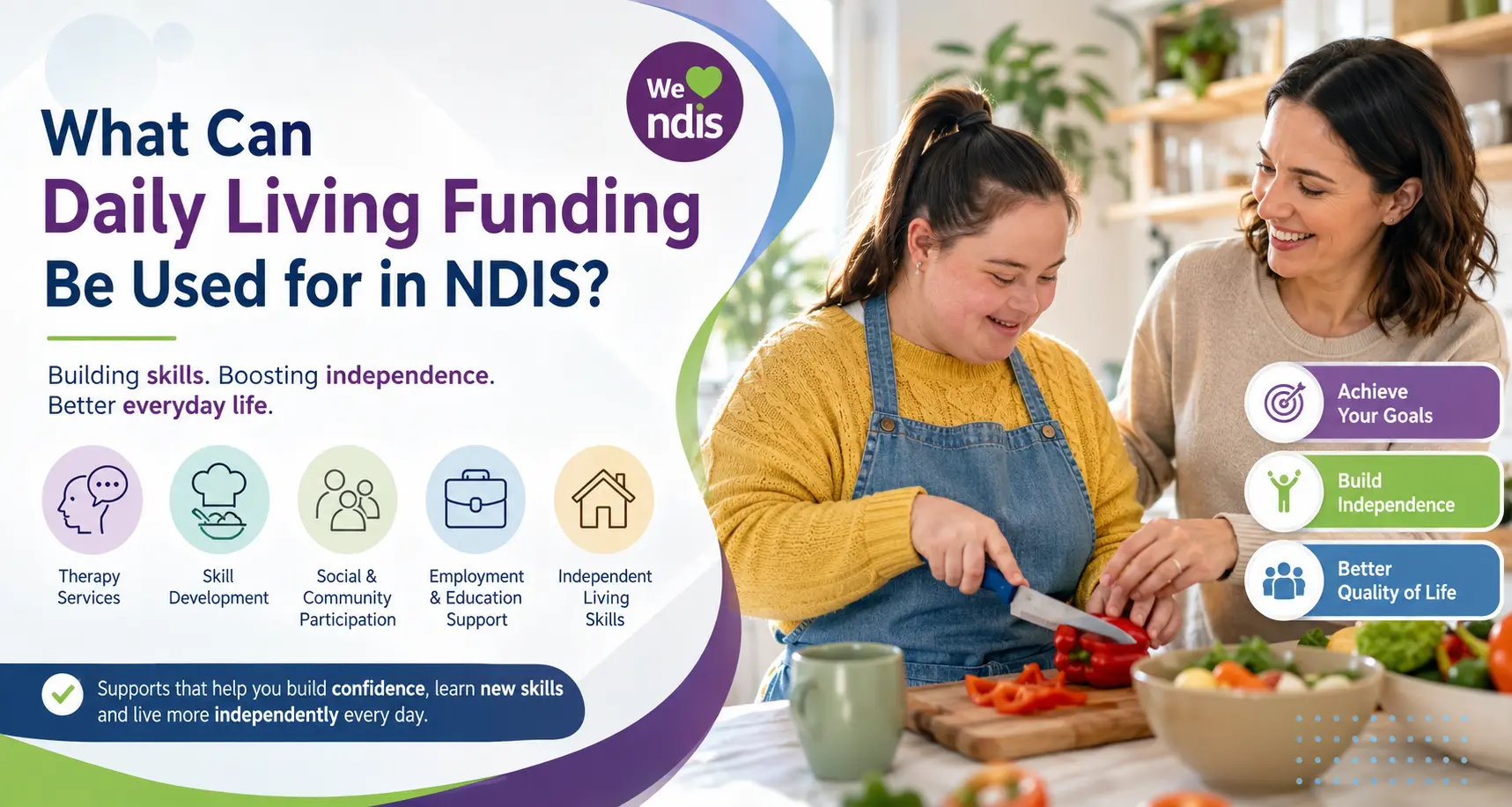
Understanding NDIS support categories can feel confusing at first, especially when terms like “Improved Daily Living” appear in your plan. Many participants and families often ask: what can improved daily living funding be used for NDIS and how it can help improve independence and quality of life.
Improved Daily Living is part of the Capital-budget of the capacity building. It facilitates therapies, training and skill-building programs that allow for an increased level of independence for participants. The aim is not merely to provide short term relief, but skills that will be useful to the people on a day-to-day basis.
What Is Improved Daily Living NDIS?
Many people search for what is improved daily living NDIS because it is one of the most valuable support categories in an NDIS plan.
Improved Daily Living is included in the budget for Capacity Building. It provides therapies, training and skill building services that assist the participant to become more independent. The aim is not only to provide short-term help but to empower people to find skills to use every day.
This category is commonly used for:
- Therapy services
- Skill development programs
- Behaviour support
- Communication improvement
- Independence training
- Social participation activities
Unlike Core Supports, which usually help with everyday assistance, Improved Daily Living funding focuses more on building long-term abilities and confidence.
What could be the uses of Improved Daily Living Funding?
One of the most searched questions is what can improved daily living funding be used for. The answer depends on the participant’s goals and needs mentioned in their NDIS plan.
Therapy Services
Therapy is one of the biggest uses of daily living funding. Participants may access:
- Occupational therapy
- Physiotherapy
- Speech therapy
- Psychology support
- Behaviour therapy
These therapies help individuals improve movement, communication, emotional wellbeing, and daily routines.
Skill Development Programs
Daily living funding can support programs that teach practical life skills such as:
- Cooking meals
- Cleaning and home management
- Budgeting and money handling
- Using public transport
- Time management
- Personal hygiene routines
These skills help participants gain independence at home and in the community.
Social and Community Participation
Many participants use funding to improve confidence in social situations. Supports may include:
- Communication training
- Social skill development
- Group activities
- Community engagement programs
This is especially helpful for individuals who experience anxiety, communication challenges, or difficulty building relationships.
Employment and Education Support
Improved daily living supports can also help participants prepare for work or education through:
- Confidence-building programs
- Workplace communication skills
- Routine development
- Organisational training
These supports encourage greater independence and participation in daily life.
NDIS Improved Daily Living Examples
Looking at practical NDIS improved daily living examples makes the funding easier to understand.
Example 1: Learning Independent Cooking
A participant works with an occupational therapist to learn safe meal preparation, kitchen organisation, and grocery shopping skills.
Example 2: Improving Communication Skills
A speech therapist helps a participant improve verbal communication and social interaction for school or work environments.
Example 3: Building Social Confidence
A support program teaches social engagement skills, helping participants confidently join community activities and group events.
Example 4: Personal Care Training
Participants may receive assistance learning personal hygiene routines, dressing independently, or creating structured daily schedules.
NDIS Funding Improved Daily Living Skills
The purpose of NDIS funding improved daily living skills is to create long-term positive outcomes rather than temporary support.
These skills may include:
- Skill Area Purpose
- Communication Skills Improve speaking and social interaction
- Household Skills Manage cleaning, cooking, and organisation
- Personal Care Develop hygiene and self-care independence
- Emotional Regulation Build coping and behavioural strategies
- Community Participation Increase confidence in public and social settings
The NDIS focuses on helping participants achieve greater independence while improving their quality of life.
Improved Daily Living NDIS Code
Some participants also search for the improved daily living NDIS code while reviewing their plan or invoices.
This support category is generally linked to Capacity Building supports and may appear under codes related to therapies and skill-building services. Providers usually help participants understand which supports fall under the correct funding category.
It is always important to ensure services align with participant goals and are considered reasonable and necessary under NDIS guidelines.
What Can NDIS Funds Be Used For?
People often wonder what can NDIS funds be used for overall. NDIS funding is intended to support participants in areas that improve independence, wellbeing, communication, mobility, and community participation.
Funding may cover:
- Therapies
- Support workers
- Assistive technology
- Community participation
- Skill-building activities
- Personal care support
However, supports must relate directly to a participant’s disability and approved goals.
What Can I Spend My NDIS Funding On?
If you are asking what can I spend my NDIS funding on, the best approach is to check your plan categories and goals carefully.
Daily living funding is generally used for supports that:
- Improve independence
- Develop practical life skills
- Support social inclusion
- Enhance communication abilities
- Increase confidence in daily routines
Participants can maximise their funding with registered NDIS providers in Perth and support coordinators.
Final Thoughts
Daily living funding under the NDIS plays a major role in helping participants build confidence, independence, and practical life skills. From therapy services to social participation and personal development programs, Improved Daily Living supports are designed to create long-term positive outcomes.
Understanding what can improved daily living funding be used for NDIS helps participants and families make informed decisions and use their funding in ways that truly improve everyday life. With the right supports, individuals can achieve greater independence, stronger community connections, and a better quality of life.
FAQs
What is improved daily living NDIS?
Improved Daily Living is a Capacity Building support category in the NDIS that helps participants develop skills for greater independence and everyday functioning.
What are the possible uses for funding for improved daily living?
It can be used for therapies, life skill training, communication support, social skill development, and independence-building activities.
Can daily living funding pay for therapy?
Yes, many therapy services such as occupational therapy, physiotherapy, psychology, and speech therapy can be funded if theyrelate to participant goals.
What are some NDIS improveddaily living examples?
Examples include learningcooking skills, improving communication, building social confidence, and developing personal care routines.
Can Improved Daily Living funding help with community participation?
Yes, funding may support programs and activities that improve social interaction, confidence, and participation in community life.
Looking for a Registered NDIS Provider in Perth?
Our experienced team is here to help you achieve your goals with personalised NDIS support across Perth.