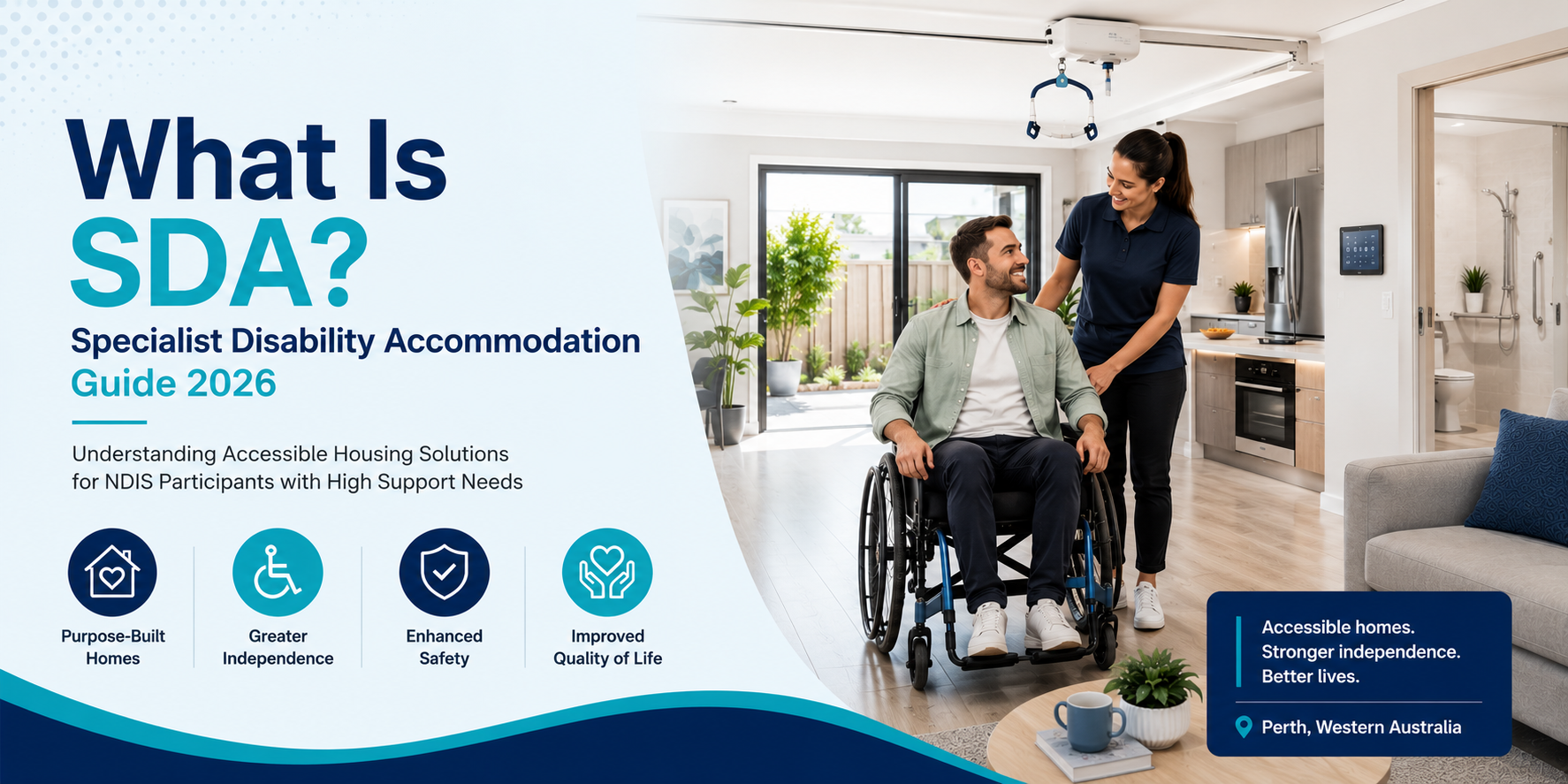
Finding suitable housing can be one of the biggest challenges for people living with significant disabilities. A safe, accessible, and supportive home environment plays a vital role in promoting independence, well-being, and community participation. This is where Specialist Disability Accommodation (SDA) can make a meaningful difference.
Funded through the National Disability Insurance Scheme (NDIS), SDA provides eligible participants with access to purpose-built housing designed to meet complex support and accessibility needs. Understanding how SDA works can help participants and families make informed decisions about long-term housing options.
What Is Specialist Disability Accommodation (SDA)?
Specialist Disability Accommodation (SDA) is a type of NDIS-funded housing specifically designed for individuals with extreme functional impairments or very high support needs. These homes are built or modified to improve accessibility, safety, and independence while supporting participants in their daily lives.
Unlike other NDIS supports, SDA funding is intended to cover the cost of the physical housing environment rather than the support services delivered within the home. The aim is to provide participants with accommodation that enables them to live more comfortably, safely, and independently.
SDA homes are designed according to strict accessibility standards and can include features such as wider doorways, wheelchair-friendly layouts, assistive technology, and adaptable living spaces.
Who Is Eligible for SDA?
Not every NDIS participant qualifies for Specialist Disability Accommodation. SDA is generally available to individuals whose disability significantly impacts their ability to live safely and independently in standard housing.
Eligibility is assessed by the NDIS based on several factors, including:
- The participant’s functional impairment
- Level of daily support required
- Long-term housing needs
- Potential benefits of specialist housing
- Whether SDA represents a reasonable and necessary support
Participants must typically demonstrate that specialized housing will improve their outcomes and reduce barriers to independent living.
How SDA Differs from Other NDIS Housing Supports
Many people confuse SDA with other housing-related NDIS supports. However, each serves a different purpose.
Supported Independent Living (SIL)
Supported Independent Living provides assistance with daily tasks such as personal care, meal preparation, cleaning, and medication management. SIL focuses on support services rather than the home itself.
Individual Living Options (ILO)
ILO offers flexible living arrangements tailored to individual preferences, goals, and support networks. It focuses on how support is delivered within a chosen living environment.
Specialist Disability Accommodation (SDA)
SDA specifically funds the housing infrastructure. Participants may receive SDA funding alongside SIL or other support services, depending on their needs.
Types of SDA Housing
The NDIS classifies SDA properties into four design categories to meet different accessibility and support requirements.
Improved Liveability
These homes are designed for individuals with sensory, intellectual, or cognitive disabilities. Features may include improved visibility, simplified layouts, and enhanced wayfinding elements.
Fully Accessible
Fully Accessible homes support people with significant physical disabilities. Common features include step-free access, wider hallways, accessible bathrooms, and wheelchair-friendly design.
High Physical Support
This category provides advanced accessibility features and integrated assistive technologies for participants with complex physical support needs.
Common features include:
- Ceiling hoists
- Automated doors and windows
- Emergency backup power systems
- Adjustable kitchen and bathroom fittings
- Smart home technology
Robust Housing
Robust SDA homes are built for participants who may require a more resilient living environment due to complex behavioural support needs. These properties focus on durability, safety, and long-term functionality.
Benefits of Specialist Disability Accommodation
Choosing the right accommodation can significantly improve a participant’s overall quality of life.
Greater Independence
Purpose-built environments allow participants to complete everyday tasks with less reliance on others, encouraging greater autonomy and confidence.
Improved Safety
Accessible design features help reduce the risk of accidents and create safer living conditions for people with complex mobility or support needs.
Enhanced Quality of Life
Living in a home designed around individual requirements can improve physical comfort, emotional wellbeing, and overall satisfaction with daily life.
Increased Community Participation
Many SDA homes are located near local services, transport options, recreational facilities, and community programs, helping participants remain connected and engaged.
Long-Term Housing Stability
SDA provides a sustainable housing solution that can continue meeting a participant’s needs as circumstances change over time.
How to Choose the Right SDA Home
Selecting suitable accommodation involves more than finding an available property. Participants should carefully evaluate several factors before making a decision.
Accessibility Requirements
Ensure the property meets current and future mobility, safety, and support needs.
Location and Community Access
Consider proximity to family, healthcare providers, public transport, and local amenities.
Support Availability
Review the availability of support workers and disability services in the area.
Lifestyle Goals
Choose accommodation that supports personal goals, independence, employment, education, and social participation.
What to Expect During the SDA Application Process
The SDA approval process generally involves several important stages.
Assessment of Needs
Housing and support requirements are evaluated to determine whether SDA is appropriate.
Evidence Collection
Healthcare professionals provide reports and supporting documentation outlining the participant’s needs.
NDIS Review
The NDIS assesses the application and determines whether SDA funding will be included in the participant’s plan.
Finding Suitable Accommodation
Once approved, participants can begin exploring available SDA housing options.
Transition Into the Home
Participants move into their chosen accommodation and begin accessing the benefits of specialist housing.
Final Thoughts
Specialist Disability Accommodation provides eligible NDIS participants with access to purpose-built housing that promotes independence, safety, and a higher quality of life. From fully accessible homes to high physical support properties, SDA offers housing solutions designed around individual needs and long-term goals.
Understanding the different SDA design categories, eligibility requirements, and available housing options can help participants and families make informed decisions about future living arrangements. For those seeking SDA Services, working with NDIS Provider Perth can make the process easier and ensure access to accommodation that supports greater choice, inclusion, and everyday independence.
Frequently Asked Questions
What does SDA stand for in the NDIS?
SDA stands for Specialist Disability Accommodation. It refers to housing designed for NDIS participants who have extreme functional impairments or very high support needs.
Does SDA funding pay for support workers?
No. SDA funding covers the housing itself. Support services such as personal care and daily assistance are generally funded separately through supports like Supported Independent Living (SIL).
Can I choose where I live if I receive SDA funding?
Yes. Participants usually have choice and control over their housing options and can select a property that aligns with their approved SDA funding and personal preferences.
What features are commonly found in SDA homes?
Features may include wheelchair accessibility, wider doorways, accessible bathrooms, smart home technology, ceiling hoists, step-free entry, and emergency backup systems.
How long does it take to get SDA approval?
Approval timelines vary depending on the complexity of the application, supporting evidence provided, and NDIS review processes. Participants should allow sufficient time for assessments and documentation.