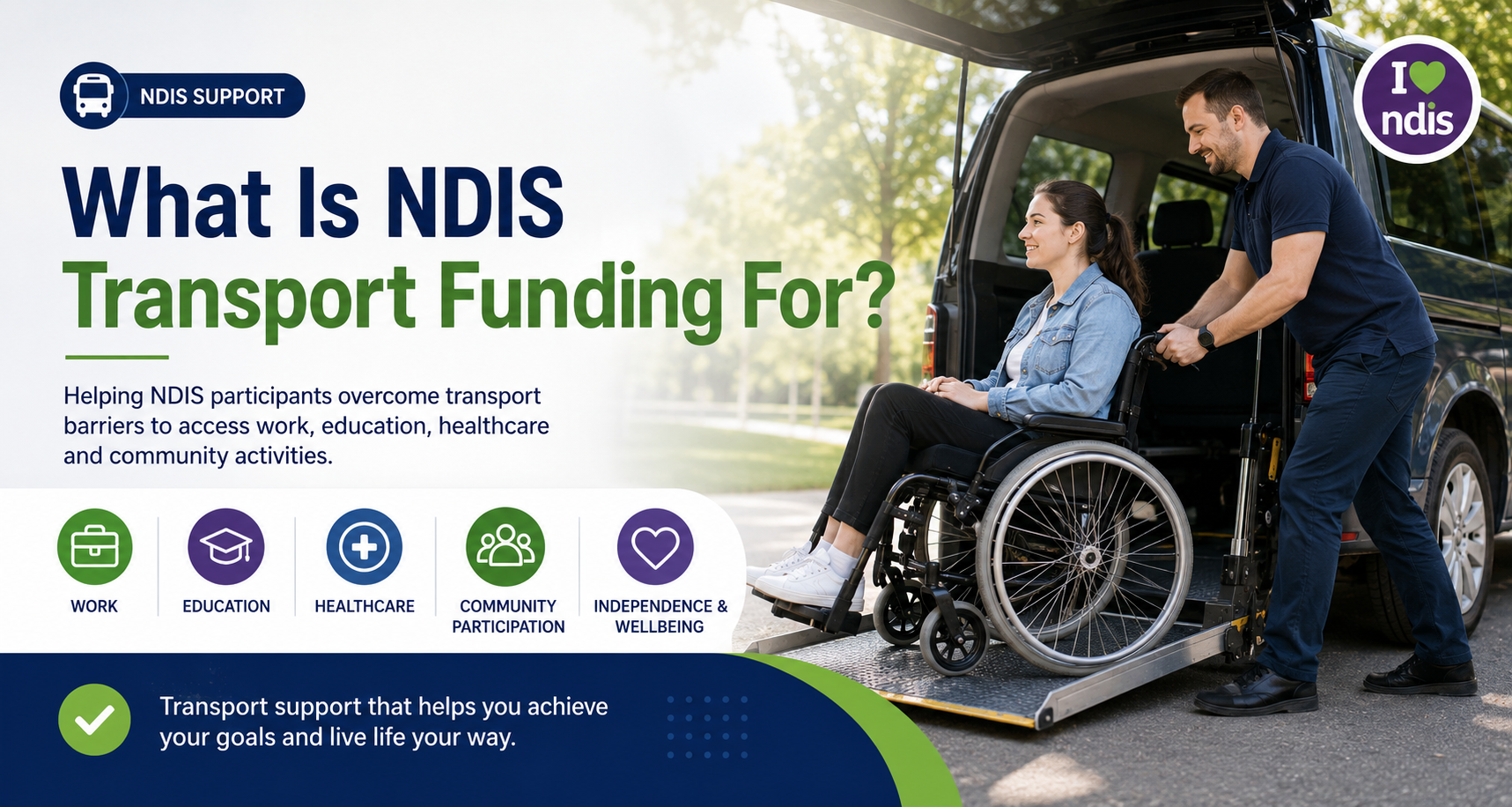
Reliable transportation plays a key role in helping people manage everyday responsibilities and remain involved in their communities. Travelling to work, educational institutions, healthcare appointments, therapy sessions, and social activities is often an important part of maintaining independence and achieving personal goals.
For some people with disabilities, travelling without support can be difficult. Challenges such as mobility limitations, communication barriers, or difficulties accessing public transport may affect their ability to move around safely and confidently.
NDIS transport funding is available to assist eligible participants whose disability impacts their travel options. This support can help reduce transport-related barriers and make it easier to access opportunities that contribute to independence, community involvement, and overall wellbeing.
Understanding NDIS Transport Funding
Transport funding is a type of NDIS support that may be included in a participant’s plan when their disability significantly affects their ability to travel independently. The funding is intended to help participants reach places and activities that are connected to their everyday life, personal development, and NDIS goals.
The overall aim is to improve access to employment, education, healthcare services, social participation, and other important opportunities.
Who May Be Eligible for Transport Funding?
Transport support is not automatically included in every NDIS plan. Eligibility is determined based on individual circumstances and the impact a person’s disability has on their ability to travel.
A participant may be considered for transport funding when:
- Their disability makes public transport difficult or inaccessible.
- Independent travel presents significant challenges.
- Travel assistance is required to access work, education, training, or community-based activities.
- The support meets the NDIS reasonable and necessary criteria.
Eligibility is assessed individually as part of the planning and review process.
What Expenses Can Transport Funding Help Cover?
Transport funding is generally intended to assist participants in reaching activities that contribute to their goals and support greater community involvement.
Examples may include:
- Travel related to employment
- Trips to educational institutions or training programs
- Attendance at therapy sessions or healthcare appointments
- Participation in community and social activities
- Accessing disability-related services and supports
- Involvement in programs that build skills and independence
The purpose is to help participants remain engaged in activities that support their development and quality of life.
Can Transport Funding Be Used for Taxis or Ride-Share Services?
Using Transport Funding for Taxi Travel
Taxi services may be used when they are an appropriate transport option based on a participant’s disability-related requirements. Many participants choose taxis when other travel methods are not practical or accessible.
Using Ride-Share Services Such as Uber
Ride-sharing platforms may also be used when the travel relates to approved NDIS activities and aligns with the participant’s plan. Participants should ensure their funding is being used appropriately and maintain any records required for plan management.
Does the NDIS Fund Vehicle Purchases?
Many participants ask whether transport funding can be used to buy a car.
In most situations, the purchase of a standard vehicle is not funded through the NDIS because vehicle ownership is considered a personal living expense rather than a disability-specific support.
However, the NDIS may provide funding for certain vehicle modifications where they are directly related to a participant’s disability and meet the reasonable and necessary requirements.
How Is the Amount of Transport Funding Determined?
The level of funding provided varies between participants and depends on individual circumstances.
Factors that may influence the amount of support include:
- Work or employment commitments
- Participation in study, training, or education
- Frequency of community engagement
- Disability-related transport requirements
- Personal goals outlined within the NDIS plan
Funding arrangements may be reviewed and adjusted when circumstances change.
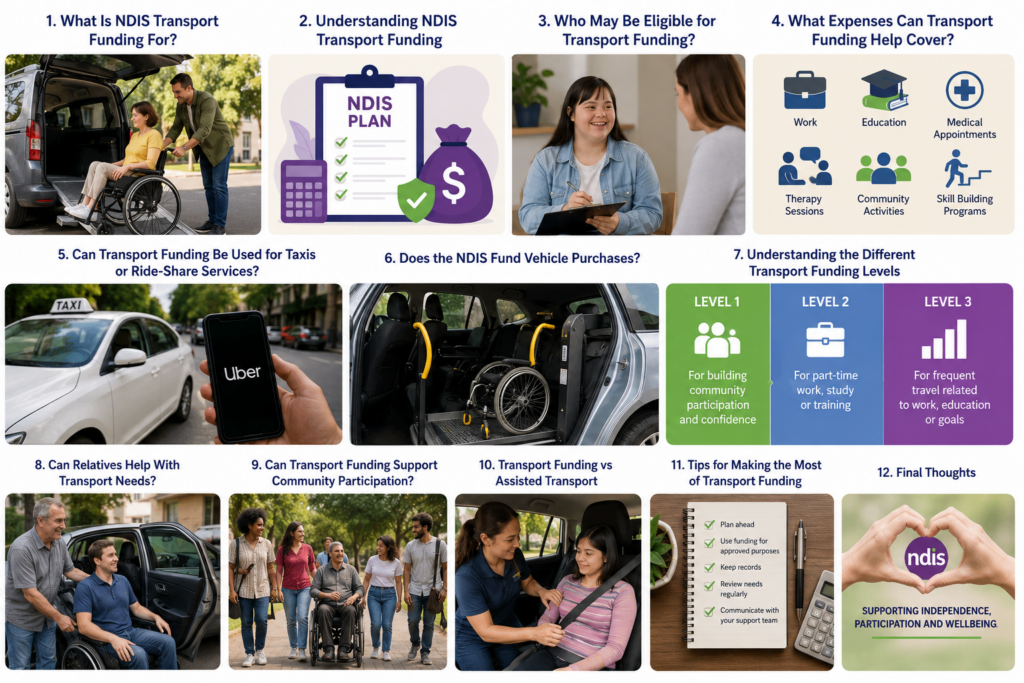
Understanding the Different Transport Funding Levels
Transport funding is commonly provided through different support levels that reflect a participant’s travel needs and lifestyle.
Level 1 Transport Support
This level is generally suited to participants who are working towards increased community involvement and social participation.
Funding may assist with:
- Community access
- Social engagement
- Recreational activities
- Developing independence and confidence
Level 2 Transport Support
Level 2 funding is commonly provided to participants involved in part-time employment, study, training, or ongoing community activities.
It may support travel associated with:
- Part-time work
- Vocational education
- Training programs
- Community participation opportunities
Level 3 Transport Support
Participants with more frequent travel requirements may receive Level 3 support.
This level may assist with:
- Regular work-related travel
- Ongoing educational attendance
- Frequent community participation
- Activities linked to approved NDIS goals
Can Funding Levels Change?
Yes. Transport funding is reviewed periodically and can be adjusted if a participant’s circumstances, goals, employment status, or support requirements change over time.
Can Relatives Help With Transport Needs?
Is It Possible for a Parent or Relative to Provide Transport?
Many participants receive transport assistance from parents, family members, carers, or close friends. The role of family-provided transport and any related arrangements will depend on the participant’s individual circumstances and NDIS plan.
How Are Informal Supports Considered?
The NDIS recognises the contribution of informal supports, including assistance provided by family members and carers. These existing supports may be considered during planning and review discussions when determining funded supports.
Can Transport Funding Support Community Participation?
Yes. A key objective of transport funding is to help participants access opportunities within their local community.
This may include:
- Social gatherings
- Community programs
- Volunteer opportunities
- Recreational activities
- Group-based events
- Skill-building initiatives
Being actively involved in the community can contribute to stronger social connections, increased confidence, and greater independence.
Transport Funding vs Assisted Transport: What Is the Difference?
Although these terms are often used interchangeably, they refer to different types of support.
Transport funding generally provides financial assistance to help cover travel-related expenses.
Assisted transport involves direct support from a worker who helps a participant travel safely while also providing disability-related assistance where required. Thismay include support with mobility, communication, or personal care during the journey.
The support available will depend on individual needs and the details of the participant’s NDIS plan.
Tips for Making the Most of Transport Funding
Participants can use their funding more effectively by:
- Planning travel requirements ahead of time
- Using funding for approved purposes
- Keeping accurate records of travel expenses
- Reviewing transport needs before plan reassessments
- Discussing any changes in circumstances with their support team
Regular planning and review can help ensure transport supports continue to align with individual goals and daily living needs.
Final Thoughts
Transport support can play an important role in helping eligible NDIS participants access employment, education, healthcare services, social activities, and community programs. By understanding how transport funding operates and the different levels of support available, participants can make informed decisions and use their funding more effectively.
If you need guidance regarding transport supports, funding eligibility, or plan reviews, a registered NDIS provider in Perth can help you better understand your available options and identify supports that align with your goals and everyday requirements.
Looking for a Registered NDIS Provider in Perth?
Our experienced team is here to help you achieve your goals with personalised NDIS support across Perth.