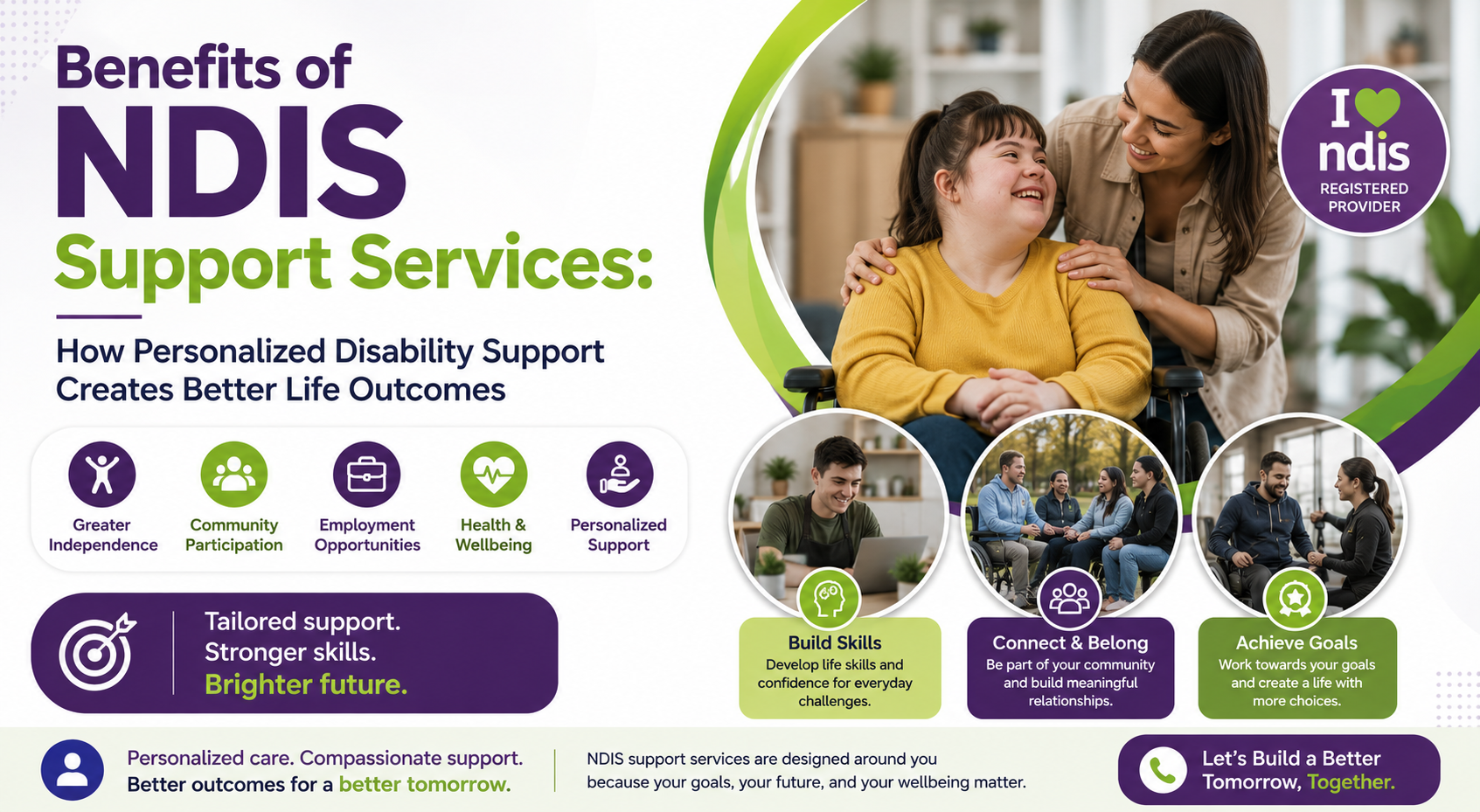
The NDIS Support Services help the individual to live a better everyday life. NDIS Support Services make everyday life better for the individual.
For some people, having a disability can make everyday living more difficult, but the proper support will help make things easier. The National Disability Insurance Scheme (NDIS) was designed to support eligible Australians to connect with services and supports to help them become more independent, live a healthier life and participate in their community.
NDIS support services are more than simply being given help. They are intended to improve participants’ skills, attain their personal goals and enhance their quality of life. From providing support with daily activities to therapy services, supports and assistance available through the NDIS can offer practical solutions to meet the individual’s needs, as well as assist with work readiness and social inclusion.
It is important to know how these services are provided to assist participants and families with informed choices in their NDIS plans, and to select services that match their goals.
NDIS Support Services have a significant impact on everyday life
The NDIS supports services are individualised to each person’s needs. Supports do not provide a one-size-fits-all solution but rather are designed with a person in mind to help them to meet their goals and challenges.
This could be support to provide personal care or domestic tasks for some participants. For some, it might be learning life skills, obtaining therapy, or being more involved with the community.
The aim of NDIS support is not just to help a participant to receive support, but to build confidence and independence and to help them function in daily life. As new skills are acquired and relevant supports are provided, the participant can often feel more at ease and in control of his/her day-to-day activities and future.
How can NDIS Support Services enable me to become more independent?
One of the most prevalent goals in NDIS plans is independence. A large number of participants are interested in knowing how to carry out daily activities more confidently and with autonomy from others (family or carers).
NDIS support services can help participants learn practical skills like:
- Safely and independently preparing meals
- Care and upkeep of the home.
- To travel by public transport with confidence
- Planner and schedule meetings.
- Taking care of one’s personal hygiene.Taking care of their personal care.
- Basic budgeting and money management skills.
Support workers will be able to offer guidance, encouragement and support to help them develop these skills at their own pace. This may help build self-confidence and offer chances for home and community independence over the years.
NDIS support services help people with disabilities to participate in their local community and social activities.
There are many people with disabilities who have barriers that can make it hard for them to take part in community activities. The barriers can be transportation, lack of confidence, communication or decreased access to social opportunities.
The goal of the NDIS support service is to enable participants to be more involved in their community, they can help participants by:
- Participate in the community’s events and programs
- Participate in clubs and social organizations.
- Engage in sport and recreational activities
- Engage in service in the community;
- Practice social skills and develop friendships
- Discover new interests and hobbies
The involvement of the community is a vital part to the enhancement of mental health, the alleviation of social isolation and a way of helping citizens feel more connected with others.
Can I use the NDIS to access services like therapy and allied health?
Yes. Many participants have therapy and allied health supports in their NDIS plans to help them function in their everyday lives and to live their life to the full.
NDIS funding can be used to help access services like:
Occupational Therapy
Occupational therapists assist participants in learning skills for daily living, enhance independence and suggest equipment and/or home adaptations as needed.
Physiotherapy
Physiotherapy can help participants improve their mobility, strength, balance and physical function.
Speech Therapy
Speech pathologists assist participants who have communication issues, speech development, language difficulties or swallowing issues.
Psychologists support participants to manage emotional wellbeing, develop coping strategies and enhance mental health outcomes.
Behaviour Support
BPs collaborate with those they support and families to identify effective strategies to enhance behaviour and improve daily life.
Through access to professional therapy services, participants can attain specific outcomes, which can help contribute to long-term independence and wellbeing.
What are the ways in which NDIS Support Services can assist in achieving employment goals?
Many people with a disability are working towards, or want to achieve, meaningful employment. The NDIS does not offer employment services, but it may support people to be ready for work opportunities.
These are some types of supports that are available for people who are looking for or have a job, such as:
- Developing communication skills in the profession.
- Knowing how to manage time;
- Developing resumes and job applications
- Practising interview skills
- Investigating careers and career opportunities.
These supports increase the readiness of the participants for the workforce and enable them to be more suited to the workforce in which they are seeking employment.
What kinds of supports are available to caregivers and families?
Family and carers can play a very important role for NDIS participants. Sometimes however, caring for children is physically and emotionally challenging.
NDIS support services can help by:
Respite Care
Respite services provide relief for caregivers and quality services to participants.
Support Coordination
Support coordinators are available to support participants to understand their plans, connect with support providers and effectively manage supports.
In-Home Assistance
Support workers can help with daily activities, personal care and housework tasks, thus lightening the stress on family members.
Information and Guidance
Families can find resources, education and professional advice to help them to support their loved ones.
The supports are aimed at enhancing participants’ and caregivers’ wellbeing.
What is Assistive Technology and how does it help NDIS Participants?
Assistive technology is a term for equipment, devices or modifications that enable the participant to perform daily activities more safely and independently.
Examples include:
Scooters and mobility devices
These can be used to help walkers move around and access equipment.Walking frames and support equipment.
- Communication devices
- Hearing support technology
- Home modifications
Use adaptive computer and digital technology
The right assistive technology can enhance safety, access, communication and engagement in everyday life. It also can help participants become more independent at home, work, school and in the community.
How Can NDIS Support Services Support Employment Goals?
Finding meaningful employment is an important goal for many NDIS participants. While the NDIS does not directly provide jobs, it can fund supports that help participants prepare for employment opportunities.
Employment-related supports may include:
- Building workplace communication skills
- Developing confidence and social skills
- Learning time management techniques
- Preparing resumes and job applications
- Practising interview skills
- Exploring career pathways and work options
These supports help participants become better prepared for the workforce and improve their ability to pursue employment opportunities that match their interests and abilities.
What Support Is Available for Families and Caregivers?
Families and caregivers often provide essential support for NDIS participants. However, caregiving responsibilities can sometimes become physically and emotionally demanding.
NDIS support services can provide assistance through:
Respite Care
Respite services give caregivers temporary breaks while ensuring participants continue receiving quality support.
Support Coordination
Support coordination help participants understand their plans, connect with providers, and manage available supports effectively.
In-Home Assistance
Support workers can assist with personal care, daily activities, and household tasks, reducing pressure on family members.
Information and Guidance
Families can access resources, education, and professional guidance to help them better support their loved ones.
These supports contribute to improved wellbeing for both participants and their caregivers.
How Does Assistive Technology Help NDIS Participants?
Assistive technology refers to equipment, devices, or modifications that help participants complete daily activities more safely and independently.
Examples include:
- Wheelchairs and mobility aids
- Walking frames and support equipment
- Communication devices
- Hearing support technology
- Home modifications
- Adaptive computer and digital technology
The right assistive technology can improve safety, accessibility, communication, and participation in everyday life. It can also help participants achieve greater independence at home, work, school, and within the community.
What Should I Look for When Choosing an NDIS Provider in Perth?
Choosing the right NDIS provider in Perth is an important decision that can influence your overall experience and outcomes.
When comparing providers, consider:
- Experience working with participantswho have similar needs
- Qualifications and training of support staff
- Flexibility of services
- Communication and responsiveness
- Understanding of NDIS requirements
- Ability to provide personalised support
- Positive participant reviews and feedback
A good provider should take the time to understand your goals, respect your choices, and deliver supports that help you achieve meaningful outcomes.
Final Thoughts
NDIS support services play an important role in helping participants build independence, improve daily living skills, access therapy services, and engage more actively in their communities. From learning practical life skills to pursuing employment goals and accessing assistive technology, the right supports can create meaningful opportunities for personal growth and long-term success.
By understanding the range of available supports and choosing providers that align with individual goals, participants can make the most of their NDIS plans and work towards a more independent and fulfilling future.
Frequently Asked Questions
Who can access NDIS support services?
People who meet NDIS eligibility requirements may be able to access funded support services. Eligibility generally depends on age, residency status, and the impact of a permanent disability on daily life.
Can I change my NDIS provider if I am not satisfied?
Yes. Participants generally have the right to change providers if they feel their current services are not meeting their needs or expectations.
Can NDIS support services be provided in my home?
Yes. Many supports can be delivered in the participant’s home, including personal care, daily living assistance, therapy services, and skill development programs.
Are NDIS support services personalised?
Yes. NDIS supports are designed around each participant’s goals, circumstances, and support needs rather than following a standard approach.
How often can I receive NDIS support?
The frequency of support depends on your approved NDIS plan, funding allocation, and personal goals.
Looking for a Registered NDIS Provider in Perth?
Our experienced team is here to help you achieve your goals with personalised NDIS support across Perth.